Spring is officially here. It's been a long time since I made a blog entry but life has a way of 'getting in the way' of things like blogging. It's been a busy time addressing deadlines for my articles in upcoming issues of Muskoka Life magazine and my summer column in The Muskokan as I always like to be ahead of the game. And now the sun is shining and the promise of warmer weather this week has me wishing that spring would suddenly burst forth. It's been a long and cold winter with lots of snow but I know that so many gardeners are just itching to get their hands back into the dirt.
Last week we attended Canada Blooms, our premier garden show and came home full of new ideas. Peter and I checked out new composite decking materials for the future replacement of our cedar deck. While our gazebo will last another summer, we looked at a wooden structure that would provide less maintenance (as we now assemble and then take down our gazebo each year to lengthen its longevity) as we get on in years. It's important to think about these things so that we can continue to enjoy our garden as we age.
We also got some new ideas for adding water features and planting combinations that will bring our garden to life again this summer. Now all we need to do is wait for the snow to melt. With April on the doorstep you still have time to order your veggie seeds. I'm anxious to try out some of the many varieties of new tomatoes this season. Remember to check out the new grafted vegetables now on the market. This year's new plant is Ketchup 'n' Fries - a tomato grafted onto potato rootstock, a great novelty plant to add to your kitchen garden collection.
For those of us in the snow belt, spring is still a couple of weeks away but the lengthening days keep us hopeful!
Tuesday, March 24, 2015
Monday, June 10, 2013
Gardening for Geeks
I just finished reading this great garden book, "Gardening for Geeks" and let me tell you it just isn't for geeks or novice gardeners, even seasoned gardeners can learn a new thing or two. This book by Christy Wilhelmi is chock full of information on the basics of gardening with many great ideas for simple solutions that you can do yourself to complex problems in the garden.
Christy covers the basics of building garden beds, soil amendments, composting and much more. There is information on building your own trellises, irrigation and water harvesting (especially important in these days of climate change) plus information on various techniques of gardening including French intesive, Aquaponics and Bio-intesive.
The book also provides information on growing a variety of basic vegetable crops and then finished up with some recipes to use your fresh picked produce (they're simple too if your not into cooking). As well Christy provides information on a variety of ways to save your produce including making your own dehydrator.
Gardening for Geeks is a real how to manual that is easy to understand and follow, a must have for any novice gardener or garden geek or for those of us who need a refresher or want to learn something new. I know I got some new ideas and tips I want to put to use in my garden this summer. So take time out from weeding, settle down with a cool drink and enjoy this book - it's a quick read.
Tuesday, April 16, 2013
Protect Your Garden - Eco Friendly Solutions
The garden season will soon be upon us and with flowers and veggies come pests and diseases. Not all that happens in the garden are good things, nature has it's own agenda but with a little knowledge you can learn the good pests from the bad. And if you're growing veggies you will certainly want to use eco-friendly solutions as the trend in health consciousness continues.
A terrific new book that offers great identification and solutions is "Ed Rosethal's Protect Your Garden, Eco-friendly Solutions for Healthy Plants." This easy to read book covers topics like Pests, Diseases, Nutrients, Environmental Stresses, and Controls. I love the format of the book which is so beneficial for new gardeners. Great close-up photos make identification of pests and diseases easy. For each problem questions are asked: How common are the pests? What do they look like? What kinds of plants do they attack?Where are they found on the plant? What do they do to the plant? And then to help you remedy the situation there is Exclusion and Prevention followed by Controls and Beneficial Biologicals.
The book covers most of the common pests and diseases and you can rest assured that the control methods are both eco-friendly and safe for your plants, family and family pets. As I work with community gardeners many of whom are new to gardening, learning how to prevent garden problems is high on their list. For our Demonstration Farm in Kenya and the many subsistence farmers we work with over there, learning eco-friendly solutions to garden problems is something we are constantly being asked for. And the photos in the book are very good for helping farmers to clarify their agricultural problems.
There are some things in nature that you just can't control but for other problems a little knowledge on plant, pest and disease life cycles can result in applying eco-firendly solutions to keep your garden healthy and producing productively. Ed Rosenthal's Protect Your Garden book is a great resource title to add to your garden library.
A terrific new book that offers great identification and solutions is "Ed Rosethal's Protect Your Garden, Eco-friendly Solutions for Healthy Plants." This easy to read book covers topics like Pests, Diseases, Nutrients, Environmental Stresses, and Controls. I love the format of the book which is so beneficial for new gardeners. Great close-up photos make identification of pests and diseases easy. For each problem questions are asked: How common are the pests? What do they look like? What kinds of plants do they attack?Where are they found on the plant? What do they do to the plant? And then to help you remedy the situation there is Exclusion and Prevention followed by Controls and Beneficial Biologicals.
The book covers most of the common pests and diseases and you can rest assured that the control methods are both eco-friendly and safe for your plants, family and family pets. As I work with community gardeners many of whom are new to gardening, learning how to prevent garden problems is high on their list. For our Demonstration Farm in Kenya and the many subsistence farmers we work with over there, learning eco-friendly solutions to garden problems is something we are constantly being asked for. And the photos in the book are very good for helping farmers to clarify their agricultural problems.
Tuesday, April 9, 2013
Growing Organic Vegetables and Herbs for Market
These are words by Keith Stewart in the preface of his book "Growing Organic Vegetables and Herbs for Market". There are many people today both young and old, who have a romantic notion of getting back to the land, planting a few vegetables to sustain their family and sell the rest, a little market garden farm but they really have no idea of the work that is involved in creating a sustainable market farm. But here is a book that can really help them, that is if they read it before they take the plunge.
The very first chapter identifies 20 questions for a newbie to ponder before laying out cash, time and effort to get involved in farming, it's not as easy as it seems as the quote above shows. Once you've answered the 20 questions in Chapter 1 positively and decided that a market farm is for you, this resouce manual takes you step by step through the process. Keith uses his own farm and other small farming operations as examples and covers everything from land selection to tools, shed, greenhouses and other structures on to plant materials and even down to designing your farm stand, making signage and marketing. I love his final chapter "Looking After Number One" which focuses on personal health and safety including taking time off for rest and relaxation (a hard thing to do if you're a farmer). However, farming is demanding work and if you can't handle your stress then you won't be able to deal with the problems (most thanks to Mother Nature) when they occur.
With the continued emphasis on healthy eating, more and more people are turning toward their local farms and farmers market for the source of delicious, nutritious food for their families and we have dedicated farmers to thank for that. For those who really do want a change of lifestyle and are willing to make the commitment to farming, we thank you. This book is as necessary a tool as a trowel and a hoe for the aspiring market farmer. I guarantee that if you read Keith's book, you'll be well on your way to growing a succesful market garden business.
Tuesday, April 2, 2013
Farm Animals and Gardening - A great combination!
With the trend towards backyard vegetable gardening and the production of our own food, many people are getting interested in keeping animals as part of a small-scale farming eco-system. Many municipalities now are even allowing residents to keep a few chickens in their yard in urban areas. Those who live outside urban centres are finding interest in housing a goat or two, a few rabbits and some honey bees as part of a small scale farming enterprise.
This concept is not new as our forefathers all had small scale farm operations, even in their backyards. Raising farm animals is part of a sustainable gardening or agricultural system. Take chickens for example, not only do they provide us with eggs and meat but they help in the garden by scarifying the ground once a crop has been removed and they eat those nasty pests and bugs that can harm our crops. And not to mention, they help fertilize the gardens as they walk through depositing their excrement. The same is true for ducks, turkeys, rabbits, goats, pigs, sheep and cows even though you may need to relegate them to a zero graze unit or small barn structure. And we haven't even discussed the possibility of other commercial by-products like goat's cheese, fudge, soaps, wool and more. And what about the honey bees? A few hives will provide bees that help pollinate our vegetables and flowers while at the same time providing delicious and nutritious honey, along with products like bee pollen, beeswax for candles and other uses.In urban areas, there is even the suggestion of keeping rooftop hives but take note of the cautions in terms of extreme heat and cold and the difficulty of lifting the honey filled supers.
If you are interested in enlarging your backyard agricultural garden to a more sustainable and inclusive ecological system then perhaps the addition of a few animals might be for you. A great book to help you learn more about incorporating small farm animals into your backyard homestead is "The BACKYARD HOMESTEAD Guide to Raising FARM ANIMALS", Edited by Gail Damerow. This is a wonderful book for novices as it uses simple language with great drawings to show the different breeds of animals, how to determine their sex, care and maintenance, and even down to dealing with disease. It even shows birthing positions of normal and problem births for goats. Each chapter gives drawings for different kinds of animal housing along with feeding instructions. As well each chapter explains the parts of the animal that are used for culinary purposes. Even though I live in an urban area and can only hope someday soon to be able to have a chicken or two in my backyard, I was fascinated to learn so much about all the other animals that can make up a sustainable farming enterprise (makes me want to move to the country). This book is certainly an essential part of any small scale gardener or farm business library as it covers it all.
A companion book to The BACKYARD HOMESTEAD Guide to Raising FARM ANIMALS is HOW TO BUILD Animal Housing, 60 Plans for Coops, Hutches, Barns, Sheds, Pens, Nest Boxes, Feeders, Stanchions and Much More" by Carol Ekarius. This book is gives more detailed architectural type drawings of the various animal enclosures from small portable chicken coops to full scale horse and cattle barns. It outlines the minimum area requirements needed by each different type of animal for optimal aminal health encompassing the Five Freedoms for Domestic Animals: Freedom from: 1) Malnutrition; 2) Discomfort; 3) Disease; 4) Fear or Distress and 5) Freedom to express their natural behaviour. The line drawings with detailed dimensions and instructions will help even new farmers to build proper structures correctly. The book discusses issues like working safely with sidebars on "Caution" and "Tips" helping you to achieve a positive outcome while maintaining a safe working environment. The Chapter on Construction helps you identify the various kinds of building materials, tools you will need for building and even helps you understand the load-bearing capacities of soil so that you can build a strong and true foundation. This book is also a much needed element of any small-scale farme'rs library.
It's time we starting considering more about healing our planet earth and ridding ourselves of our reliance on fertilizers and chemicals and got back to a more natural and sustainable way of raising garden produce with the help of our four legged friends. These easy to read books will help get your started and are available from Storey Publishing.
This concept is not new as our forefathers all had small scale farm operations, even in their backyards. Raising farm animals is part of a sustainable gardening or agricultural system. Take chickens for example, not only do they provide us with eggs and meat but they help in the garden by scarifying the ground once a crop has been removed and they eat those nasty pests and bugs that can harm our crops. And not to mention, they help fertilize the gardens as they walk through depositing their excrement. The same is true for ducks, turkeys, rabbits, goats, pigs, sheep and cows even though you may need to relegate them to a zero graze unit or small barn structure. And we haven't even discussed the possibility of other commercial by-products like goat's cheese, fudge, soaps, wool and more. And what about the honey bees? A few hives will provide bees that help pollinate our vegetables and flowers while at the same time providing delicious and nutritious honey, along with products like bee pollen, beeswax for candles and other uses.In urban areas, there is even the suggestion of keeping rooftop hives but take note of the cautions in terms of extreme heat and cold and the difficulty of lifting the honey filled supers.
If you are interested in enlarging your backyard agricultural garden to a more sustainable and inclusive ecological system then perhaps the addition of a few animals might be for you. A great book to help you learn more about incorporating small farm animals into your backyard homestead is "The BACKYARD HOMESTEAD Guide to Raising FARM ANIMALS", Edited by Gail Damerow. This is a wonderful book for novices as it uses simple language with great drawings to show the different breeds of animals, how to determine their sex, care and maintenance, and even down to dealing with disease. It even shows birthing positions of normal and problem births for goats. Each chapter gives drawings for different kinds of animal housing along with feeding instructions. As well each chapter explains the parts of the animal that are used for culinary purposes. Even though I live in an urban area and can only hope someday soon to be able to have a chicken or two in my backyard, I was fascinated to learn so much about all the other animals that can make up a sustainable farming enterprise (makes me want to move to the country). This book is certainly an essential part of any small scale gardener or farm business library as it covers it all.
A companion book to The BACKYARD HOMESTEAD Guide to Raising FARM ANIMALS is HOW TO BUILD Animal Housing, 60 Plans for Coops, Hutches, Barns, Sheds, Pens, Nest Boxes, Feeders, Stanchions and Much More" by Carol Ekarius. This book is gives more detailed architectural type drawings of the various animal enclosures from small portable chicken coops to full scale horse and cattle barns. It outlines the minimum area requirements needed by each different type of animal for optimal aminal health encompassing the Five Freedoms for Domestic Animals: Freedom from: 1) Malnutrition; 2) Discomfort; 3) Disease; 4) Fear or Distress and 5) Freedom to express their natural behaviour. The line drawings with detailed dimensions and instructions will help even new farmers to build proper structures correctly. The book discusses issues like working safely with sidebars on "Caution" and "Tips" helping you to achieve a positive outcome while maintaining a safe working environment. The Chapter on Construction helps you identify the various kinds of building materials, tools you will need for building and even helps you understand the load-bearing capacities of soil so that you can build a strong and true foundation. This book is also a much needed element of any small-scale farme'rs library.
It's time we starting considering more about healing our planet earth and ridding ourselves of our reliance on fertilizers and chemicals and got back to a more natural and sustainable way of raising garden produce with the help of our four legged friends. These easy to read books will help get your started and are available from Storey Publishing.
Sunday, March 24, 2013
Spring is on the way!
"Praise gladly in springtime when earth seems to glow with new life and colour in all things that grow."
It's in the air, I feel it! Spring is on the way. Despite today's biting wind (and last night's ground covering snowfall), the sun is shining and just that alone gives one the feeling that life is on the upswing. But earlier in the week it was really nice, the sun exuded spring's warmth and everywhere you went you heard the constant drip, drip, drip as icicles began to melt. Along south facing walls, the snow began rapidly disappearing and that beautiful damp black earth was exposed. I even saw the shoots of daffodils and some early crocus pushing through the snow. What a joy that was!
Spring is a time for rebirth, a time when seeds and bulbs planted last fall, having had a long winter's rest, germinate and spring to new life bringing smiles and delights to our hearts and gardens. It is a wonderful time of year. And this spring we here at Rosewood have lots to celebrate. Seeds of another kind we have been sowing with our family charity The Ronnie Fund are also germinating and taking root. On the 7th of April Ronnie will be travelling to Western Carolina University in North Carolina where he will be lecturing as a visiting scholar telling all about our development projects in Wongonyi Village. Meeting with Anthropology, Sociology and Nursing students he will inform them of our programs in Agriculture, Microfinance, Greenhouse Operations, Biosand Water Filters, Educational Scholarships and Health and Nutrition. The tiny seeds that Ronnie has planted and nurtured with Dr. Mwaniki and Dr. Hickey at WCU through their student study abroad program over the past 3 years has blossomed into a great partnership. Ronnie will then travel to The George Washington University in Washington, D.C. where he has been planting more seeds. Together we are all creating a beautiful garden in Wongonyi Village, Kenya. Then Ronnie joined by his wife Serah will travel here to Bracebridge where they will meet the many donors who have funded over programs and projects over the years.More beautiful flowers will be added to the bouquet.
Gardening takes patience - you sow a little seed, give it sunshine, water and a little love, nurturing it in good weather and bad until one day you can reap a great harvest. Community development is just like gardening - patience and kindness are needed but someday a successful community will be your reward and harvest.
Monday, February 18, 2013
Fresh Food Basket Programs - Get Healthy
| In winter when you don't have access to the farmer's markets, a fresh food basket is the perfect alternative to healthy eating. |
Last week it was cold and blustery outside but in the kitchen at Bracebridge United Church all was cozy and warm as I was joined by a group of ladies and we were cooking up Ukranian and Mediterranean delights. This Community Kitchen group cooks once a month on the delivery day for the Fresh Food Basket Program in Muskoka. Operated through several partners including the District of Muskoka, the program aims to get people to eat more nutritiously. For only $20.00 a month you can sign up to receive a food basket brimming with fresh produce. I find this especially appealling when the ground is covered with snow and there is no access to farmers markets or your own garden. And it's a bargain - last week our basket included: Iceberg lettuce, leaf lettuce, red cabbage, an english cucumber, 4 bananas, a couple of oranges, three lemons, a bag of mini carrots, mushrooms, cauliflower, broccoli, 2 tomatoes, a bag of locally grown pea shoots, a bag of spinach, a cantelope and a 5 lb bag of potatoes. How great is that! And they even supply nutrition information and recipes for the produce in our baskets.And so our Community Kitchen group, using the food provided in the basket got cooking. We made yummy Ukranian Pierogies with the traditional potato and cheese filling and a delicious Mediterranean Vegetable stew chock full of tomatoes, cauliflower, onions, carrots, boccoli flavoured with basil, oregano, thyme and of course, garlic. It's a great afternoon of fun and friendship and the ladies each go home with two dishes for dinner. We love to try new recipes covering all different types of cuisine from tradtional familiar home-cooked favourites to African, Asian, Mediteranean and southern specialities. And this same group of ladies is involved in a Community Garden program in the summer, each having a plot to grow their own selection of veg. It's a great program promoting healthy eating. Some of the women with children say that since they have been involved in the Community Garden and Kitchen program, their children have developed a great interest in growing and eating their own produce. And that's what it's all about!
Even if gardening's not for you, I encourage you to seek out a fresh food basket program in your community. Let's get off the fast food feed wagon and back into cooking delicious healthy food at home. Cooking is easy when the produce is fresh and cooking at home can be a great family activity.
Monday, February 11, 2013
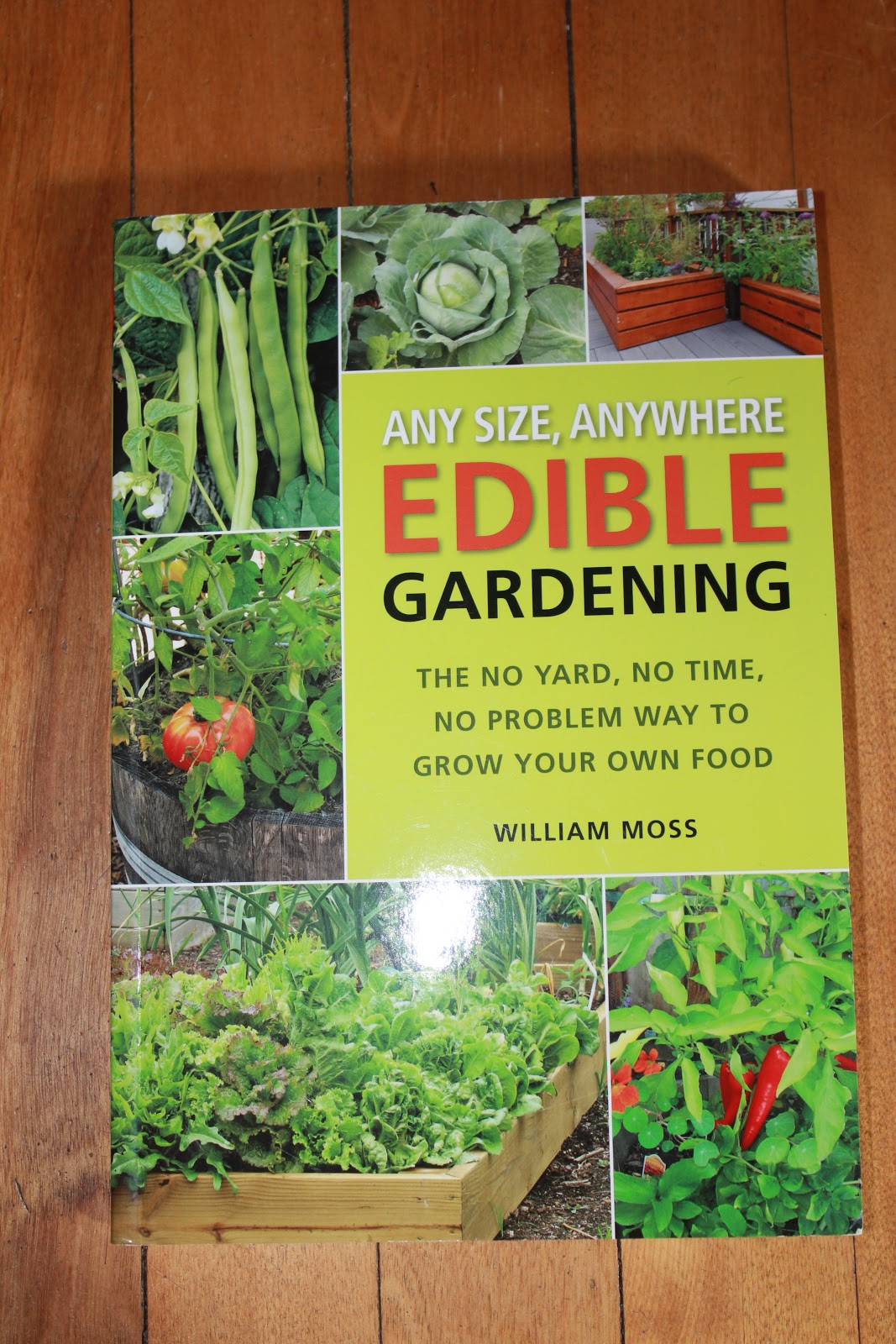
Edible Gardening - No Yard, No Time, No Problem
The trend toward edible gardening just continues to grow and grow. And I'm sure there will be even more converts to edible gardening when those who do the grocery shopping receive a shock as I did last week at the veggie market when Asapargus had jumped to $6.99 lb and all greens including lettuces, celery, kale and collard greens along with broccoli and cauliflower were $2.99 and up. My shopping bill doubled and I only purchased the barest of necessities in terms of fresh produce. Just think that you can purchase a packet of lettuce seeds for $2.19 for one of Renee's Mixed Greens and get several weeks of daily meals of fresh lettuce.
So I was really interested to read William Moss's book "Any Size, Anywhere Edible Gardening, the No Yard, No Time, No Problem Way to Grow Your Own Food." This is another great book for those just venturing into the world of growing your own edible foods. William's down-to earth style makes it easy for those starting to get their fingers dirty to get involved whether they have space for a backyard garden, room for a few pots on a balcony or patio, or simply a window box or two. It's also a great resource book for those involved in Community Gardens who are new to gardening. He lays out the basics of soil, soil tests, seed sowing, intercropping, watering, fertilizing and even composting. The books also offers step by step instruction for the planting, maintaining and harvesting of a selection of the easiest to grow veggies. And for those who love the delicious taste of a fresh picked, sun warmed tomato there is a whole chapter devoted to this most popular of garden fruits (and yes, a tomato is actually a fruit). The only thing I might dispute is William's motto of "no time" as all gardening does take time and patience but the edible results are well worth the time and effort. Easy to read this book is sure to make a successful vegetable farmer out of anyone and once you taste your own home grown produce there's no turning back!
Wednesday, February 6, 2013
Square Foot Gardening Answer Book
Wow, how time has flown since I lasted posted here but family and community obligations just seem to get in the way. But now with frigid temperatures here restricting many outdoor activities, it seems the perfect time to settled down with a hot mug of Vanilla Chai tea and get caught up on a little reading (or rather a whole lot of reading if you could see the stack by my bed). But today I've just completed reading Mel Bartholomew's book "Square Foot Gardening Answer Book".
I didn't have the opportunity to read Mel's first book on Square Foot Gardening but I have been a promoter of square foot gardening for many years. My own backyard garden consists of six 4 X 4 ft raised beds. I find the beds easy to work in as you can reach the middle from all sides. You can dedicated each square to a single crop or mix and match your veggies, especially if you are practicing succession planting. And the height of the raised beds makes it easy on the back and knees for those who are advancing in age (like myself).
Even if you are new to square foot gardening and without having read the first book, Mel's "Answer Book" will set you on the right path to successful square foot gardening. This easy to read book is perfect for novice gardeners with information on how to set up your garden to the shelf life of your harvest and everything in between. It covers soil, composting, mulch, yields, seeds versus seedling,critter control and how to handle pests and diseases including recipes for organic pesticide sprays. Even a veteran gardener will learn a tip or two from this helpful resource book. It's a quick read and I love how Mel ends with his chapter on "Making A Difference, how square foot gardening can change the world in economically depressed areas here at home and in Third World countries by creating sustainable food security through individual and community gardening. If you have limited growing area, square foot gardening may be just the answer you've been seeking. Give this book a look and square foot gardening a try.
I didn't have the opportunity to read Mel's first book on Square Foot Gardening but I have been a promoter of square foot gardening for many years. My own backyard garden consists of six 4 X 4 ft raised beds. I find the beds easy to work in as you can reach the middle from all sides. You can dedicated each square to a single crop or mix and match your veggies, especially if you are practicing succession planting. And the height of the raised beds makes it easy on the back and knees for those who are advancing in age (like myself).
Friday, September 28, 2012
Indian Summer
Although parts of the garden are well past their prime, other parts are just coming into their true glory - the burning bush is now aflame, rudbeckias are at their peak of golden beauty and my David Austen roses continue to bloom and bloom, and oh what a fragrance they give. And my climbing rose that only blooms in June has produced a multitude of fat rosy rose hips, an antidote for winter colds. I just noticed today that my wegeilia is starting to bloom again. After a crazy summer of too little water and too much heat, the past couple of weeks of cooler temperatures and a few days of rain have given everything a renewed boost.
A few days ago I harvested the last of the tomatoes, as we've already had frost, and cooked them into delicious roasted tomato sauce for enjoyment during the long cold winter days when one needs a reminder of summer's harvest. And yesterday I picked and cooked my grapes. I then froze the juice which I will make into delicious grape jelly on the next Saturday that I have free. Another taste of summer to be savoured in the depths of winter.
In the next few days we'll be taking down the gazebo and putting away the garden furniture for another season. I hate to put everything away when the days are still warm and sunny but before you know it there will be snow in the air and I'll be cursing that I didn't clean up everything when the weather was nicer. But today I'll just enjoy the blue jays calling to each other and visiting my garden to partake of the berries on the shrubs and trees. Aaah! Indian summer days!
Wednesday, September 19, 2012
Harvest Days - Tomato Time!
Oh, nothing says summer more to me than the red, ripe tomato. I love biting into a red, ripe tomato fresh from the vine, warmed by the sun, and feeling the juice drip down my chin as I enjoy the sweet delicious flavours burst in my mouth. Working in the garden it is a joy to be able to reach down pluck a tiny red jewel, like Red Candy, a quick, handy and tasty snack. And how appropriately named, for Red Candy, pictured above, tastes just like its name, like candy.
And to enjoy that taste of summer all winter long, I also grow Roma-style tomatoes which I make into tomato sauce to fill the freezer, so on a cold winter's night I can make a pizza or a pasta dinner enlivened with that delicious full bodied flavour of tomatoes. Yum! Yum!
This morning the rooftops were white with the first frosts. So with the nights getting colder as the thermometer dips with the anticipation of winter, it's time to harvest the rest of the tomatoes before we lose them to autumn's chill. I'll make the Red Candy into a tomato salad or bruschetta with the addition of some sweet onion and simply dressed with extra virgin olive oil, some white basalmic vinegar and sea salt and fresh ground pepper. The Romas and Carolina Gold will be transformed into tomato sauce.
Tomorrow we resumed the Community Kitchen cooking sessions we hold once a month where I teach some great ladies from our community a variety of recipes that are inexpensive, easy, use the freshest of ingredients and best of all taste delicious. So tomorrow we are celebrating Harvest Days by making Roasted Tomato Sauce which can be easily stored in the freezer, for thhose who are not comfortable with canning. I'll be showing them easy ways to harvest and store fresh herbs for use during the winter too as herbs you grow yourself really do taste best. If you have an abundance of tomatoes then why not try out this recipe, its easy, quick and you'll love the taste that roasting the veggies gives to the sauce.
Roasted Tomato Sauce
This recipe doesn't have any specific quantities as you can make as much or as little as you need and you can add whatever additional veggies you want. It's a great sauce to make for those picky, non-veggie eaters in your family as once the vegetables are roasted and processed together you can't taste individual veg except for the tomato flavour.
Cut into eighths a quantity of tomatoes and place in a large roasting pan. Add quartered medium sized onions, as many cloves of garlic as you want (remember that when roasted garlic loses its pungency and becomes sweet so you can add more than you think), then I add red and/or green pepper, celery, zucchini and any other vegetables you want. Drizzle over extra virgin olive oil and stir to coat. You can also add fresh herbs like basil, thyme, oregano and sea salt and fresh ground pepper to taste. I roast for about one hour at 300 degrees. Remove from oven and let cool slightly.
Process the roasted vegetables in a food processor until smooth, you may have to add some vegetable stock or tomato juice if the mixture is thick. (I find that using Roma tomatoes creates a very thick sauce which definitely needs to be thinned. If you're using ordinary or beefsteak tomatoes which are juicier, you might not need to add much additional moisture.) Use immediately if you can't help yourself or place in plastic containers in the freezer to be used in winter when you need a summertime pick-me-up.
Celebrate the end of the summer season with Harvest Days!
Monday, August 27, 2012
Food, Fun and Friends - Stokes Garden Visit
Now I can think of no better way to spend a summer's day than with a group of good friends, like my garden writing colleagues, at the Stokes Seeds Trial Gardens in Niagara with a host of garden growers wandering the fields tasting right of the vine tomatoes and peppers. But boy was it hot as you can see by those who were smart enough to bring umbrellas. Each August a group of garden writers get invited to Stokes by Peter Cantley from Loblaws to help them select the next year's offerings of tomatoes, peppers and eggplants in their Gigantico Series of vegetable plants. Sometimes we see and taste a veggie that on first bite seems great like last year's Turkish eggplant, a small round striped orange eggplant that looked like a tomato but when grown and eaten on a regular basis was agreed by all to be less than best. So next season President's Choice will offer a new variety of eggplant. Similarly this year we tasted the Kapello pepper (below). It was OK but there was another pepper with a much sweeter flavour. It's kind of neat to be a part of the selection process and to see our choices for offer the next season in the garden centres.
And after a trip through the fields tasting all those tomatoes and peppers, we are treated to a lovely lunch featuring fresh local produce from the Niagara region - fresh BLT sandwiches, a delicious salad with yummy chunks of peaches, a flat bread pizza with tomatoes and a young creamy goat cheese, pasta salad, bruschetta and large slices of delicious fresh peach pie with crumble topping and slices of sugar cube melon, accompanied by local Niagara wines. Yum! Yum! Yum!
And after lunch a group of us met with J.B. Hopkins, Parks Supervisor for Niagara-on-the-Lake who gave us a walking tour and talk on design, implementation and care of the beautiful floral displays that grace the streets of Niagara-on-the-Lake. As a provincial judge for Communities in Bloom I'm always interested to learn how communities fund and implement their displays so I can pass on tips to smaller communities who are interested in achieving similar displays. The displays are based on some years previous designs and some updates that are made on a yearly basis, sometimes colour themed as this year's tribute to the War of 1812 incorporating lots of red plant material. Displays are maintained by 2 fulltime staff and 2 seasonal staff. And for those who like flowers, these floral displays certainly draw visitors from around the globe.
We ended the day at one of the growers home to see his beautiful gardens and a few of us enjoyed BBQ burgers and a discussion on a potential new event at Stokes in the future. So needless to say, for us from Bracebridge it was well worth the drive to Niagara. Thanks so much to Peter Cantley, Bob Martin and all the folks at Stokes Seeds for another great tasting event.
And after a trip through the fields tasting all those tomatoes and peppers, we are treated to a lovely lunch featuring fresh local produce from the Niagara region - fresh BLT sandwiches, a delicious salad with yummy chunks of peaches, a flat bread pizza with tomatoes and a young creamy goat cheese, pasta salad, bruschetta and large slices of delicious fresh peach pie with crumble topping and slices of sugar cube melon, accompanied by local Niagara wines. Yum! Yum! Yum!
And after lunch a group of us met with J.B. Hopkins, Parks Supervisor for Niagara-on-the-Lake who gave us a walking tour and talk on design, implementation and care of the beautiful floral displays that grace the streets of Niagara-on-the-Lake. As a provincial judge for Communities in Bloom I'm always interested to learn how communities fund and implement their displays so I can pass on tips to smaller communities who are interested in achieving similar displays. The displays are based on some years previous designs and some updates that are made on a yearly basis, sometimes colour themed as this year's tribute to the War of 1812 incorporating lots of red plant material. Displays are maintained by 2 fulltime staff and 2 seasonal staff. And for those who like flowers, these floral displays certainly draw visitors from around the globe.
We ended the day at one of the growers home to see his beautiful gardens and a few of us enjoyed BBQ burgers and a discussion on a potential new event at Stokes in the future. So needless to say, for us from Bracebridge it was well worth the drive to Niagara. Thanks so much to Peter Cantley, Bob Martin and all the folks at Stokes Seeds for another great tasting event.
Wednesday, March 28, 2012
A Celebration of Citrus
Here is the delicious Grapefruit Pie the signature dish of Lang Sun Country Groves in Florida.
Well March is almost over and all those snowbirds will soon be returning home. (Snowbirds are those people who make a hasty retreat once winter comes to vacation in the warmer climates of the sunny south of Florida, Arizona and Latin America). And while they were away, I'm sure that they enjoyed eating a lot of locally grown citrus fruits. What could be better than picking oranges and lemons off a tree right in your own backyard.
GRAPEFRUIT PIE RECIPE
Yield: 8 servings Preparation: 15 minutes Cook: 10 Minutes Refrigerate: 2 to 3 hours
1 (6 ounce) graham cracker crust
This is an unusual variety of lemon called Fingered Citron. Originally from China, Japan and Indonesia it was grown for many centuries for its religious and ornamental value
. The thick peeled fruit is yellow with no flesh that opens into fingers.
Who knew there were so many varieties of citrus grown around the world and we were able to taste the many kinds of citrus marmelade made from this tangy fruit.
Well March is almost over and all those snowbirds will soon be returning home. (Snowbirds are those people who make a hasty retreat once winter comes to vacation in the warmer climates of the sunny south of Florida, Arizona and Latin America). And while they were away, I'm sure that they enjoyed eating a lot of locally grown citrus fruits. What could be better than picking oranges and lemons off a tree right in your own backyard.
It reminded me of two trips I have taken in recent years which involved seeing citrus up close and personal. The most recent trip was to Tuscany in Italy where we visited a museum where a large collection of unusual citrus are being grown, preserving this unique varieties from extinction. I never knew there were so many varieties of oranges that didn't even look like oranges. You can see one of those novel kinds above in the Finger Lemon (and don't you agree that it actually looks like fingers!). At the end of our tour, we had the opportunity to taste (and then purchase) bottles of delicious, tangy marmelades from each different variety. Yummy!
My other real experience with citrus was during a media trip to Polk County, Florida. We visited a Citrus Research station where we learned about the pests and diseases that affect citrus plants. We also had a tasty stop at Lang Sun Country Groves, a grower and shipper of citrus to the US. and Canada. At the end of this tour, we sat down and tucked into Grapefruit Pie, the signature dish of Mary Lang. I had forgotten about this delicious dessert until this past month when my Probus Cooking group chose the theme "Citrus". I wanted to do something different so I looked up the recipe I had been given and made the pie (it's so easy). It was a great hit. My daughter, who admitted later that she didn't think Grapefruit was a good ingredient for a pie, loved it and the next day made her own Grapefruit Pie to take to her function.
Citrus is delicious, tangy yet sweet. It brightens the flavour of other foods and it only take a squeeze. And who doesn't love biting into a juicy orange and having that sweet juice drip down their fingers. Celebrate all things citrus by making your own Grapefruit Pie, it will make you feel like a kid again.
GRAPEFRUIT PIE RECIPE
Mary Lang's Grapefruit Pie
Yield: 8 servings Preparation: 15 minutes Cook: 10 Minutes Refrigerate: 2 to 3 hours
1 (6 ounce) graham cracker crust
2 large or 3 medium red Lang grapefruit, sectioned
1 cup sugar
3 tablespoons cornstarch
1 1/2 cups water
1 (3 ounce) package strawberry flavored gelatin1
(8 ounce) container frozen non dairy whipped topping, thawed (I used real whipping cream)
Arrange grapefruit sections in graham cracker crust. Set aside.In a medium saucepan, combine sugar and cornstarch. Add water and cook over medium heat until thick and clear. Add gelatin and stir to dissolve. Let cool slightly. Pour gelatin over grapefruit sections in crust. Refrigerate until firm.Top with whipped topping.
Courtesy of Lang Sun Country Groves, Florida – Lake Alfred, Florida
Thursday, March 1, 2012
Market Day in Tuscany
A bountiful array of fresh market produce in Pistoi, Tuscany.
Sometimes life rushes past you and you don't even realize. Such as been the case for The Cottage Gardener. This past fall my life has been taken up with our newest and most ambitious project for our humanitarian charity in Wongonyi Village, Kenya where we are just starting on construction of the Mghongo Leadership Centre, Eco Lodge and Demonstration Farm. But more on that another day.
Today as the snow softly drifts down is a great day to spend perusing the seed catalogues and making selections for our upcoming summer season. These photos from our trip last summer with Donna Dawson and icangarden.com to Tuscany are a delightful reminder of the fresh produce soon to be picked from our own home garden. Just looking at these photos I can already taste those sun warmed fresh tomatoes, oozing juice that drips down your chin. The squeak of fresh beans lightly steamed and drizzled with the olive oil we bought from Marco, our tour guide and a farmer who grows olives and produces delicious honey from his beehives.
I distinctly remember the day we happened upon this market. It was raining and we travelled down a little laneway coming out into this small market square where local farmers had brought in their produce from the countryside. It all looked so delicious as we passed through the square on our way to lunch that I had almost rather been able to purchase some of these delicious and new treats and find a kitchen in which to prepare them. I just wanted to linger and see all that was available, especially garden produce that I was not familiar with (can you tell that I'm a foodie).
I simply love to try new things and also to share that knowledge and love of food with others. Currently I am working with Susan Biehn-Smith, the local co-0rdinator of the Community Garden program and Fresh Food Basket program in Bracebridge. We meet with women once a month on the delivery day of the Fresh Food Baskets and we cook with items that arrive in the baskets. Although we choose a dish or two each month, we sometimes need to substitute with what we get in the baskets. It has been great to see these women embrace new foods and recipes as we have presented them ranging from African recipes like Vegetable Curry, Pojo (lentils with tomatoes and onions), Dovi (a chicken peanut butter stew), and sprouting lentils to this month's offering of Oriental Stir-fry, Sushi and rice paper wrapped vegetable rolls. On a trip to Toronto this week I loaded up on some unusual oriental foods for a taste testing session. And with oriental veggies a continuing trend, we'll be exploring the seeds they can plant in their garden plots this spring. As well we'll be showing them seed producers and sellers like Renee's Garden who package their seeds with 3 varieties in one package, perfect for those with small garden plots or limited space.
If you haven't got your seed catalogues yet or had time to sit down and take a look, it isn't too late to order some seeds. Just remember spring is right around the corner and soon we will be able to once again enjoy fresh produce from our own gardens. What can be better than produce that is simply picked, prepared and plated in only minutes. Yum!
Sunday, August 7, 2011
Garden Tours - A Time to Share
A deck outside the kitchen provides an outdoor kitchen for entertaining.

Our largest pond with a newly created waterfall which still needs a little work.

This seating area is hidden from the main garden and is where my son Jeremy and his friends like to warm themselves on a chilly summer or autumn evening.

This newly appointed seating area is great for enjoying a glass of wine while the chef makes dinner on the BBQ.

The gazebo is where we enjoy our summer evening dinners close to the big pond. The raised box veggie gardens provide us with fresh produce.
Our largest pond with a newly created waterfall which still needs a little work.
This seating area is hidden from the main garden and is where my son Jeremy and his friends like to warm themselves on a chilly summer or autumn evening.
This newly appointed seating area is great for enjoying a glass of wine while the chef makes dinner on the BBQ.
The gazebo is where we enjoy our summer evening dinners close to the big pond. The raised box veggie gardens provide us with fresh produce.
Yesterday we were part of a garden tour for some visitors who came from Toronto with Garden Instructor Frank Kershaw. My son was surprised when the coach pulled up next to the house and a whole busload of people disembarked. But the rain held off and the weather was perfect for a garden tour. Everyone enjoyed some juice and goodies and a walk around the garden. I hope they got some good ideas.
We love hosting garden tours. Not only is it a great way to get those niggling garden tasks completed (my husband is a procrastinator and works best under pressure) but it forces you to look at your garden from someone else's perspective. I have started to rehabilitate our gardens this year. A small rock garden had become infested with a big ant nest, so I had to deal with that and then add more soil and replant and at the same time I added another great piece of granite.
You can see above that we also added a waterfall feature to our big pond. (We have three water features in our backyard - we love the sound of running water throughout the garden).The waterfall still has some adjustments to be made but it adds another dimension to the pond.
We also reconfigured our back deck. Previously it has held two Muskoka chairs on one level and a picnic table on the upper level. Well, the past couple of winters a huge icicle came down on the picnic table and finally broke the stone slab that was the table top. After having been at garden Walk Buffalo last year, we came home with an idea from that garden tour. We moved the BBQ up to replace the Muskoka chairs which had reached the end of their life span while at the same time remaking the picnic table into a table/counter for food preparation next to the BBQ. We then purchased a new seating arrangement for the upper deck. Using the frame of the old pergola (for the ice had smashed that too) we rearranged our fabric shade cover to work over this space and with enough of the leftover fabric I was able to recover the cushions so that all matched. Now we have a lovely are to sit, relax and enjoy a glass of wine while being able to converse with the grill master. And the counter area is great for setting up the food for a BBQ. Jeremy loves grilling the burgers while his friends can load their plates.
Garden tours are a great opportunity to share your garden triumphs, disappointments or mistakes. Two days before the tour while digging a hole to put up a bird house for me he cut the TV cable, luckily the cable guy came on Friday to restore order. For us, it is a chance to show the ability to reuse and recycle materials. One of our ponds is an old bathtub. The marble floor of the gazebo came from a building in Toronto via my sister's neighbours backyard. Our greenhouse was made from windows from a restaurant on our main street that was having the windows replaced and sided with leftover siding from the house and the pergola was once the children's play unit. Peter, the resident handyman, builds everything with screw nails so that he can constantly reuse materials when things outlive their current usefulness.
Take the opportunity to visit other peoples gardens and get ideas that you can use in creating your own personal sanctuary and then share what you do with others. Happy Gardening!
Monday, August 1, 2011
Summer Days, Summer Days!
These are the lovely hollyhocks that appear in our garden each year. But a recent windstorm knocked many of them over. 
I just love the beauty of a summer's day. Yesterday I had the chance to visit another gardeners' garden and see the beauty that they have created at their home. The sun was shining, good friends were in attendance all to share in one couple's creation of their personal sanctuary.
We each garden for our own reasons. For some, vegetable gardening is the way they sustain their family during the summer and winter months. Or perhaps they just want to try and reduce their carbon footprint, know where their food comes from and enjoy straight from the vine fresh produce when it is at its absolute best.
Some garden for the flowers. They love the beauty of colourful blooms and they are entranced by the wildlife and biodiversity that those blooms attract. I'm a bit of both those gardeners. I have six raised beds in which I grow a variety of fresh vegetables. There is nothing better than fresh picked beans, lightly steamed and drizzled with a little butter or extra virgin olive oil. The rest of my garden is a mix of perennials, trees and shrubs with a few containers of annuals. I too delight in the wildlife that visits my garden from the groups of starlings, a few robins and mourning doves that like to frolic in the water of our several water features to those crazy squirrels that dig up my bulbs and my beans (had to replant them several times before they actually germinated). But oh those squirrels make me laugh as they chase each other up and down the trees and along the fence tops. And then there are the couple of little chipmunks who scurry about always with their cheeks full of peanuts courtesy of our neighbour next door.
No matter what kind of a gardener you are the important thing is to love what you are doing - getting exercise, fresh air and enjoying all that nature has to offer. And to take time, not just to work in your garden, but to sit down ever once in a while and truly enjoy all that you have created. Summer is fleeting, so enjoy it while it is here!
Tuesday, July 12, 2011
A Great Gardening Year
Huge hostas grace my garden this summer.
Wow! What a great gardening year this is. People are constantly telling me how wonderful their gardens are growing. The weather experts predicted a hot, dry summer but so far we haven't experienced much of that. Instead we have alternated between cool wet weather and a few hot dry days which has resulted in the gardens growing large and lush. The hostas are huge, the berries bountious (strawberries that is!), the grapes glorious and the weeds wicked! The gardens seem to have exploded. I haven't seen a garden season like this for a few years.
We picked strawberries at Brooklands Farm in Milford Bay a few times and the berries were large and delicious. My son Jeremy baked and decorated a cake with berries to represent the Canadian flag in celebration of Canada Day. We gorged on fresh berries and whipped cream, made jam and froze a great quantity to enjoy during the winter. Yum! Yum!
The grape arbour is covered with grape bunches and it looks like we will have a great grape harvest this fall that is if we can keep the birds and squirrels away as the grapes ripen. We're looking forward to making grape jelly to enjoy on our toast when winter sets in providing a reminder of the summer that was.
My roses were ravishing this summer. Many summers I have lost leaves and buds to caterpillars before the buds could bloom but this summer everything bloomed with fragrant aroma. The peonies were perfect too - fragrant large blooms that awakened the olfactory senses as you wandered through the garden.
But along with the burgeoning beauty are the wicked weeds and ferocious ferns that seem to have taken over too. Last year I was not able to give the garden much attention due to dealing with family health issues and now with a great garden season I am forced to tackle the weed and fern problems. So with vigour I am digging out the ferns and eliminating the weeds and putting down lots and lots of mulch. (I should have shares in the mulch companies). I have also been reworking some parts of the front garden. After spending some time on a garden tour with Frank Kershaw, I am starting to lift some of my smaller plants up to display them better as I saw on that tour. Garden tours are great for getting new ideas and summer is the time when horticultural societies across the province and country are showcasing local members gardens. Take time out from your own garden chores to check out some of these tours.
Today is cool and overcast but a perfect day for getting out in the garden to continue with my garden tasks. Enjoy your day but remember always to take time out to smell the roses and celebrate the beauty of your private sanctuary.
Sunday, May 15, 2011
World Naked Gardening Day- May 14, 2011
Who would believe that there would be such an international day as World Naked Gardening Day? Well, I'm here to tell you that such a day exists and that day is May 14, 2011 this year. Now I personally can't imagine doing my garden chores naked, especially in our part of the country where May is the beginning of black fly and mosquito season. How about gardening naked protected by a bug jacket? But there are somethings a bug jacket won't be able to protect (if you know what I mean),
Personally I prefer to think about naked gardening in the same context as Jamie Oliver, The Naked Chef. For me "naked gardening" simply means just stripping away all the glitz and getting back to gardening basics, using sustainable practices like composting, integrated pest management, discontinuing use of pesticides and insecticides and the use of hertitage, heirloom and native plant material.
So celebrate World Naked Gardening Day in whatever manner makes you feel good.
Personally I prefer to think about naked gardening in the same context as Jamie Oliver, The Naked Chef. For me "naked gardening" simply means just stripping away all the glitz and getting back to gardening basics, using sustainable practices like composting, integrated pest management, discontinuing use of pesticides and insecticides and the use of hertitage, heirloom and native plant material.
So celebrate World Naked Gardening Day in whatever manner makes you feel good.
Monday, April 18, 2011
O Reluctant Spring!
O reluctant spring - when will you ever show your warm spirit and bright days.
Can you believe it - these are my little crocus, frozen in the snow that fell yesterday and through the night. A few weeks ago we were lulled into the prospect that spring was just around the corner. Warm breezes brushed our faces, we scampered to put our laundry on the line revelling in the smell of clean, fresh linens. And then wham. The warm breezes were repaced with blasts of bitter Arctic air and along with those strong winds came blinding snow - yet again. Can anyone believe that it is now April 18th. Spring when will you grace us? These tiny purple petals frozen in time and space. And as Easter approaches this weekend, we can look forward not to donning a new Easter outfit as I did when I was a child but instead to get my winter coat out again.
But the signs of spring are here - these frozen crocus, my rhubarb budding up through the ground (topped by a hood of snow) and daffodils just waiting to burst. And I must remember that we gardener's are a patient lot, so patient I must be and I know that I will be rewarded when my anticipation is finally quenched with spring's warm weather and colourful blooms.
Tuesday, March 15, 2011
Canada Blooms - Inspiration, Ideas and Information
I can hardly believe that it is mid March already and time once again for Canada Blooms, Canada's premier flower and garden show. Winter has really been hanging on and we are all ready for a breath of spring air and Canada Blooms certainly delivers that along with plenty of inspiration, ideas and information. Some people can easily feel overwhelmed at the show but here are a few tips to help you make the most out of your Canada Blooms visit.
1. Inspiration-The show gardens are large and beautiful but can be overwhelming to some who say I don't have the funds to hire a landscaper to do all that work and it is beyond my own capabilities. Remember these are show gardens where landscapers and designers are showing you new products and their services. These gardens are meant for inspiration. Look at the smaller elements that you can take home and use in your own garden - it could be a new plant variety, and interesting colour combination or a new hardscape element like a water feature, outdoor kitchen idea or some cool accesories.
2. Ideas - The show is filled with lots of great ideas. Bring along your digital camera and a notebook and pen so you can make note and record ideas or new plants you'd like to try in your garden. If you rely on your memory, you'll lose a lot of ideas. By the end of the show your head will be so filled with ideas that when you go home, you won't remember them all. I keep a file of new gardens ideas so that when I have time and want to make changes to my garden I can readily see ideas I wanted to try.
3. Information - If you are a novice gardener just getting started or an experienced gardener wanting to find out about new plants or techniques, Canada Blooms information sessions are filled with quality education from experienced gardeners. There are many opportunities throughout the 4 day show to here excellent speakers who share their knowledge, tips and techniques. Again, bring along a notebook so you can jot down all the great gardening advice.
If you've never been to Canada Blooms, there is no time like the present. Not only will you leave filled with Inspiration, Ideas and Information but you'll leave knowing that spring is just around the corner. So celebrate spring this week at the Direct Energy Centre in Toronto at Canada Blooms.
1. Inspiration-The show gardens are large and beautiful but can be overwhelming to some who say I don't have the funds to hire a landscaper to do all that work and it is beyond my own capabilities. Remember these are show gardens where landscapers and designers are showing you new products and their services. These gardens are meant for inspiration. Look at the smaller elements that you can take home and use in your own garden - it could be a new plant variety, and interesting colour combination or a new hardscape element like a water feature, outdoor kitchen idea or some cool accesories.
2. Ideas - The show is filled with lots of great ideas. Bring along your digital camera and a notebook and pen so you can make note and record ideas or new plants you'd like to try in your garden. If you rely on your memory, you'll lose a lot of ideas. By the end of the show your head will be so filled with ideas that when you go home, you won't remember them all. I keep a file of new gardens ideas so that when I have time and want to make changes to my garden I can readily see ideas I wanted to try.
3. Information - If you are a novice gardener just getting started or an experienced gardener wanting to find out about new plants or techniques, Canada Blooms information sessions are filled with quality education from experienced gardeners. There are many opportunities throughout the 4 day show to here excellent speakers who share their knowledge, tips and techniques. Again, bring along a notebook so you can jot down all the great gardening advice.
If you've never been to Canada Blooms, there is no time like the present. Not only will you leave filled with Inspiration, Ideas and Information but you'll leave knowing that spring is just around the corner. So celebrate spring this week at the Direct Energy Centre in Toronto at Canada Blooms.
Subscribe to:
Posts (Atom)